Japanese Space Startup Conducts Static Fire Test for Methane-Powered Zero Rocket Engine
Japan's Interstellar Technologies has successfully fired a methane-powered rocket engine prototype designed for its upcoming Zero small-satellite launch vehicle.

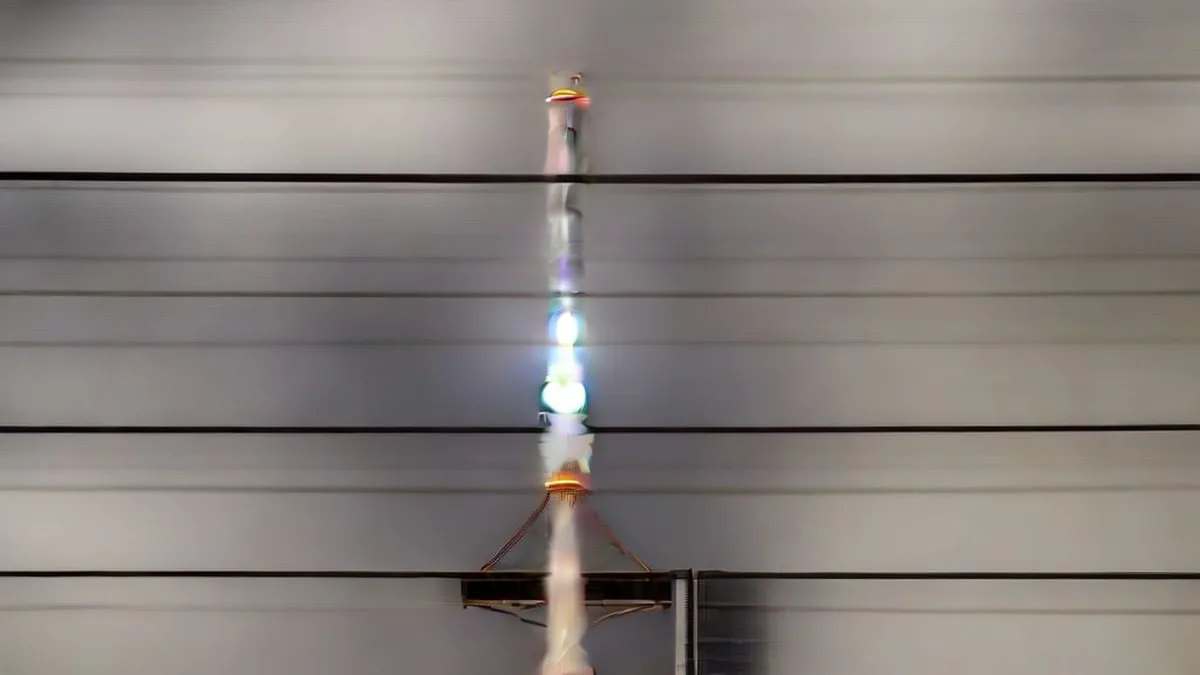
The test, carried out at the company’s dedicated propulsion testing complex in Taiki, northern Japan, evaluated the combustion dynamics and thrust performance of an engine fueled by liquid biomethane. The successful burn demonstrates pivotal propulsion readiness as private Asian space ventures race to offer cost-effective, low-Earth orbit satellite launch capabilities.
Advancing Methane Propulsion in Private Aerospace
Methane has rapidly emerged as the propellant of choice across next-generation space vehicles globally. Offering superior combustion efficiency, reduced soot accumulation, and relatively low storage demands compared to traditional kerosene or hydrogen fuels, methane enables easier engine reuse and lowered refurbishment intervals.
Interstellar Technologies’ Zero launch vehicle is designed as a two-stage light rocket capable of placing payloads of up to several hundred kilograms into low-Earth orbit. During the static test fire, the engine ignited smoothly, maintaining stable combustion chamber pressures and generating a powerful, blue-tinted exhaust plume across several seconds of firing.
Key advantages of the propulsion system include:
* Reduced Carbon Deposition: Methane burns significantly cleaner than standard rocket-grade kerosene (RP-1), minimizing coking inside the injector nozzles. * Local Resource Utilization: The test incorporated purified biomethane derived from local agricultural processing, emphasizing sustainable propellant sourcing. * Compact Orbital Architecture: Tailored specifically for rideshare and dedicated micro-satellite deployments across low-Earth inclinations.
Strengthening Commercial Satellite Launch Access
Global demand for responsive, dedicated launch infrastructure has surged alongside the proliferation of commercial Earth-observation constellations, environmental monitoring platforms, and telecommunications satellites. With heavy-lift systems often prioritizing institutional missions and massive broadband constellations, small-satellite operators frequently face long launch delays or suboptimal orbital insertions.
By developing a streamlined, domestically manufactured rocket, Interstellar Technologies aims to capture a share of the burgeoning small-satellite delivery market while bolstering Japan's sovereign commercial launch autonomy.
Following the successful static firing, engineering teams will review telemetry data, thermal gradients, and structural wear ahead of expanded multi-engine cluster tests scheduled in the coming phases of the Zero launch program.
About Gaurav Sen
Senior Editorial Director & Lead Geopolitical Analyst
Senior Editorial Director and investigative correspondent covering national affairs, international relations, defense, and economic policy for Live News 365.
Related Dispatches

High Stakes in Patna: Why Bihar's Legislative Council Elections Are a Crucial Litmus Test for Coalitions

'Only Rajinikanth Can Do This': Allu Arjun Lauds Superstar's Unrivaled Box Office Stature and Jailer Franchise